
What Features Should You Look for in a No-Code Trading Platform?
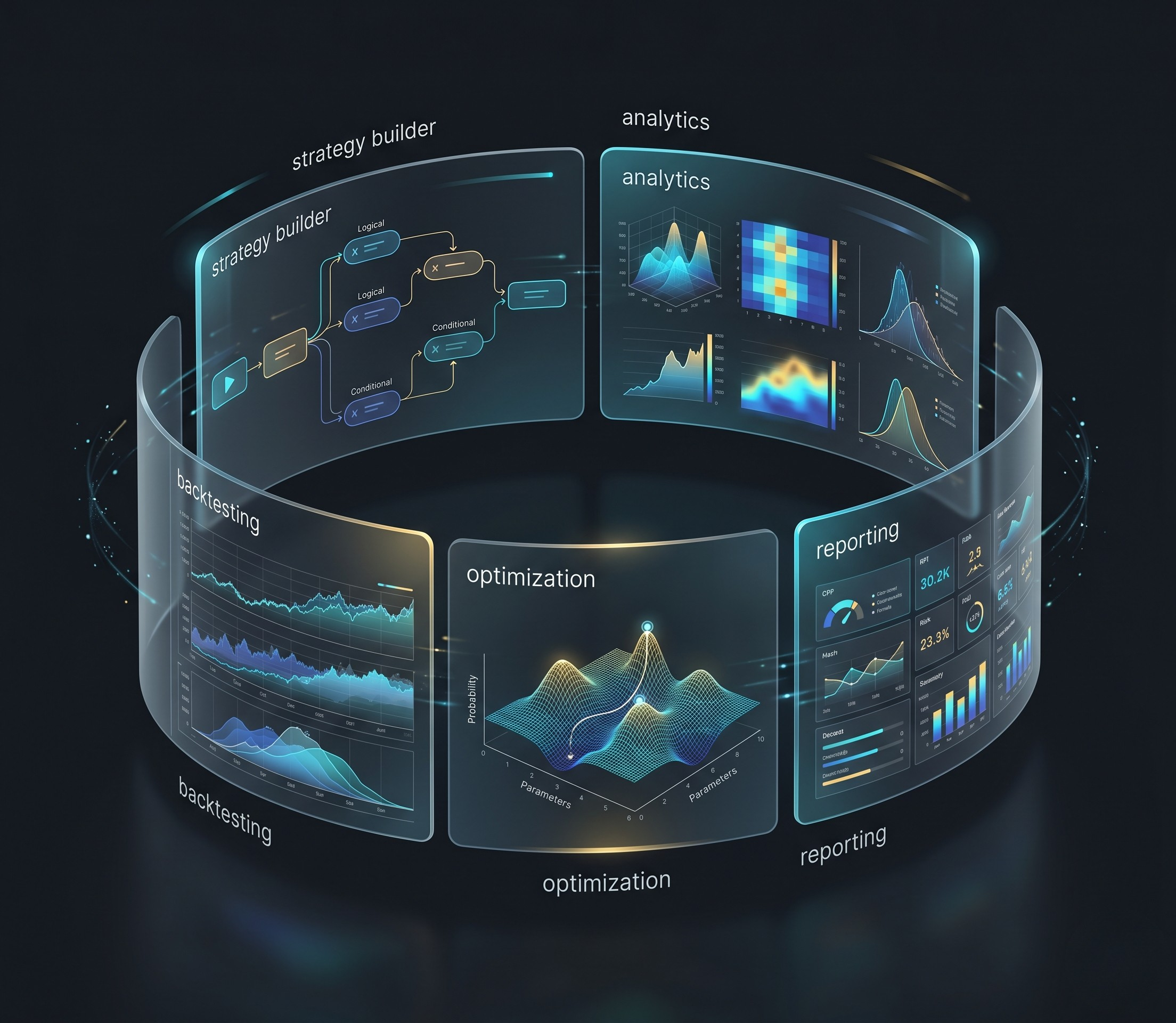
The no-code trading space has grown fast. Three years ago, building an automated trading strategy without writing code meant using rigid bot templates with a handful of preset conditions. Today, no-code trading platform features vary enormously. Some platforms let you describe a strategy in plain English and run a backtest in seconds. Others call themselves no-code while hiding technical complexity behind layers of drag-and-drop UI. The gap between the best and worst platforms is significant, and choosing the wrong one wastes time and capital.
This article walks through the seven essential features that separate a serious no-code trading platform from a dressed-up bot marketplace.
What a No-Code Trading Platform Actually Is
A no-code trading platform lets you build automated trading strategies without writing code. You describe the rules for entering and exiting trades using a visual interface, natural language, or a structured form. The platform then tests those rules against historical data and, on some platforms, deploys them live.
This is different from manual trading, where you decide each trade yourself in real time. It is also different from traditional algorithmic trading, which requires writing strategies in Python, C++, or a proprietary scripting language like Pine Script or EasyLanguage.
No-code platforms occupy the space in between: the rules are still fully yours, and execution is still automated, but you define everything without touching code. The logic is transparent. You can see exactly what conditions trigger a trade.
This is not copy trading or signal following. When you build on a no-code platform, your strategy is your own. No one else is telling your account what to do.
The 7 Essential No-Code Trading Platform Features
1. Natural Language Strategy Builder
The best no-code platforms let you describe your strategy in plain English and translate that into executable logic. You type something like: "Enter long when RSI(14) drops below 30 and MACD crosses above its signal line. Exit when RSI rises above 70." The platform parses that, constructs the conditions, and runs the backtest.
This matters because it removes the translation step between your idea and the platform. You think in concepts, not in syntax. A natural language builder means the only limitation is the quality of your idea, not your ability to express it in code.
What to watch for: some platforms claim natural language input but only support a narrow vocabulary of preset phrases. Test this before committing.
2. Historical Backtesting with Real Exchange Data
Backtesting is non-negotiable. Before any strategy goes live, you need to see how it would have performed across real market conditions. Not simulated data. Not synthetic prices. Real historical price data from actual exchanges.
The quality of the data matters as much as the backtesting engine. Platforms that use their own internal price feeds instead of verified exchange data will produce results that look clean in backtest and fall apart in live trading. Look for platforms that source data from recognized data providers and disclose where their data comes from.
What to watch for: check how far back the historical data goes. One year of history is not enough to evaluate a strategy through a full market cycle. You want at least three years, ideally more.
3. Multi-Indicator Support Without Custom Scripting
Most strategies use more than one indicator. RSI and MACD together. Moving average crossover confirmed by volume. Bollinger Bands with an ADX filter. A no-code platform that only supports single-indicator strategies is not equipped for serious strategy development.
Multi-indicator support should be accessible without scripting. You should be able to combine indicators using AND/OR logic, set thresholds and lookback periods, and chain multiple conditions without writing a line of code.
What to watch for: some platforms support multi-indicator setups in theory but require you to configure each condition in a different section of the interface. The experience should feel integrated, not patched together.
4. Realistic Fee and Slippage Simulation
A backtest without fee simulation is not a backtest. It is a best-case scenario calculation that will never match live trading.
Every trade on every exchange has costs: taker fees, maker fees, and slippage (the difference between the price you expected and the price you actually got). A platform that ignores these costs will show you inflated returns in backtest that shrink or disappear when you go live.
The right setup: you should be able to specify the fee rate (e.g. 0.1% taker) and an optional slippage estimate before running any backtest. Results should reflect these costs explicitly.
What to watch for: platforms that do not show you total fees paid in the backtest results are hiding costs that matter. This is a red flag.
5. Clear Performance Metrics (Not Just Percentage Return)
Total return is the least useful metric in a backtest results dashboard. A strategy that made 40% over three years with a 60% maximum drawdown and 12 trades is very different from one that made 35% with a 15% maximum drawdown and 200 trades.
A serious no-code platform should show you, at minimum:
Total return and CAGR
Win rate and number of trades
Average win vs average loss (payoff ratio)
Maximum drawdown
Sharpe ratio (risk-adjusted return)
Time in market
These metrics together tell you whether a strategy has genuine edge or just got lucky on a few large moves.
What to watch for: platforms that prominently display return percentages and bury or omit drawdown and Sharpe ratio are optimized to make strategies look good, not to give you accurate information.

6. Strategy Library and Saved Strategies
You will build more than one strategy. Over time, you will accumulate working strategies, failed experiments, and variations you want to revisit. A no-code platform needs to support organizing and saving your work.
A strategy library lets you store, name, and retrieve strategies without rebuilding them from scratch. It should also let you compare different versions of the same strategy to see how parameter changes affect performance.
What to watch for: platforms that do not support strategy versioning or saving force you to either remember your settings or start over every session. This slows down iteration significantly.
7. Data Quality and Coverage
Data quality includes:
Exchange coverage: can you test on Binance, Coinbase, Bybit, Kraken? Or only one exchange?
Asset coverage: how many trading pairs are available?
History depth: how many years of data can you access?
Data resolution: can you backtest on 1-minute candles or only daily?
Broader coverage means you can test whether your strategy works across different market environments, not just on the one exchange where it happened to perform well.
Bonus Features That Separate the Best Platforms
Multi-asset testing: run the same strategy across BTC, ETH, and SOL simultaneously. This helps identify whether your strategy works because of genuine edge or because you happened to test it on the right asset.
Multi-timeframe analysis: use a higher-timeframe signal (e.g. daily trend direction) as a filter for a lower-timeframe entry (e.g. 1H RSI entry). A powerful technique that most no-code platforms do not support well.
AI-powered strategy suggestions: some platforms can suggest strategy improvements based on your backtest results, flagging where parameters could be adjusted for better risk-adjusted performance.
Red Flags to Avoid
No real data. If the platform does not clearly state where its price data comes from, assume it is not from verified exchange sources.
Hidden limits on backtests. No-cost tiers that let you build strategies but limit how many backtests you can run per month are designed to frustrate you into upgrading. Understand the limits before you invest time.
No drawdown or Sharpe ratio in results. Any platform hiding these metrics is prioritizing marketing over accuracy.
No fee simulation. If fees are not included in the backtest, the results are not reliable.
No explanation of entries and exits. If you cannot see exactly which conditions triggered each trade, you cannot understand what your strategy is doing or fix it when it fails.
How CoinQuant Handles Each of These Features
CoinQuant's no-code AI trading platform is built around all seven of the features listed above.
The strategy builder accepts natural language input: describe your strategy in plain English and the AI translates it into executable conditions. No Pine Script. No Python. No coding required.
Backtesting runs on Kaiko institutional data, which is sourced directly from major exchanges and cleaned for accuracy. Kaiko is the same data provider used by institutional trading desks.
Multi-indicator strategies are fully supported. Combine RSI, MACD, Bollinger Bands, moving averages, volume, and more using AND/OR logic without scripting.
Fee simulation is built into every backtest. You set the fee rate before running, and the results include total fees paid alongside all standard performance metrics including drawdown, Sharpe ratio, win rate, and payoff ratio.
Strategies are saved to your account and organized in a strategy library. You can revisit, modify, and compare versions any time.
.png)
See All CoinQuant Features
No-code trading on CoinQuant gives you institutional data, AI strategy building, and full performance analytics with no coding required.
Disclaimer:
This content is for educational and informational purposes only and does not constitute financial, investment, or trading advice. All strategies and examples are for illustrative purposes and do not guarantee results. Always conduct your own research before making financial decisions.
Key Takeaway
